December 7, 2009 by tombenjey
The January 1, 1915 edition of The Carlisle Arrow announced that Joe Gilman and Pete Calac, both Freshmen, would be leaving soon to work for Ford Automobile Company in Detroit. By the time he left, less than a week later, four more boys: Gus Lookaround, Norman Thompson, Everett Ranco and Charles Pratt, were added to the list. The Freshmen class held a reception in their honor in the Mercer’s Hall to celebrate their leaving. Joe and some of the others were called upon to say some words at the event. Later in the month, in an article entitled “What Carlisle Means to Her Graduates,” lauded Joe’s initiative:
Last summer when work was scarce and hard times had struck our country, Joseph Gilman, without any other credentials than his honest face and the fact that he was a Carlisle Indian, applied for a job at the Bethlehem Steel Works. He was one in a long line of men waiting for work. Hundreds had been laid off, but Joe was given a job and was told by the superintendent when he left that if at any time he wanted work he could find it there.
On February 5, the first report on the boys’ progress at Ford. Joseph Gilman and Gus Lookaround are in rear axle department. They have been through the rear axle operations and are now on transmission, but Lookaround still has the repair job on rear axle to learn, as there was no room for him there. Their foreman says they are good and willing workmen, Gilman being especially apt. At school they have taken up work in English, arithmetic, and penmanship, and will later take up spelling and drawing. Gilman and Ranco have attended regularly, the others having missed some sessions. At their boarding place they are behaving themselves admirably and are general favorites. They are much interested in basketball, and their instructor says they show the best form for a winning team of any group he ever saw. They never seem to lose their tempers, even when the other team is purposely rough, simply laughing it off. They have the reputation for conducting themselves as gentlemen wherever they appear.
End of Part III
Tags: Calac, Joe Gilman, Lookaround, Norman Thompson, Pratt, Ranco
Posted in Carlisle Indian School, Pete Calac | Leave a Comment »
November 29, 2009 by tombenjey
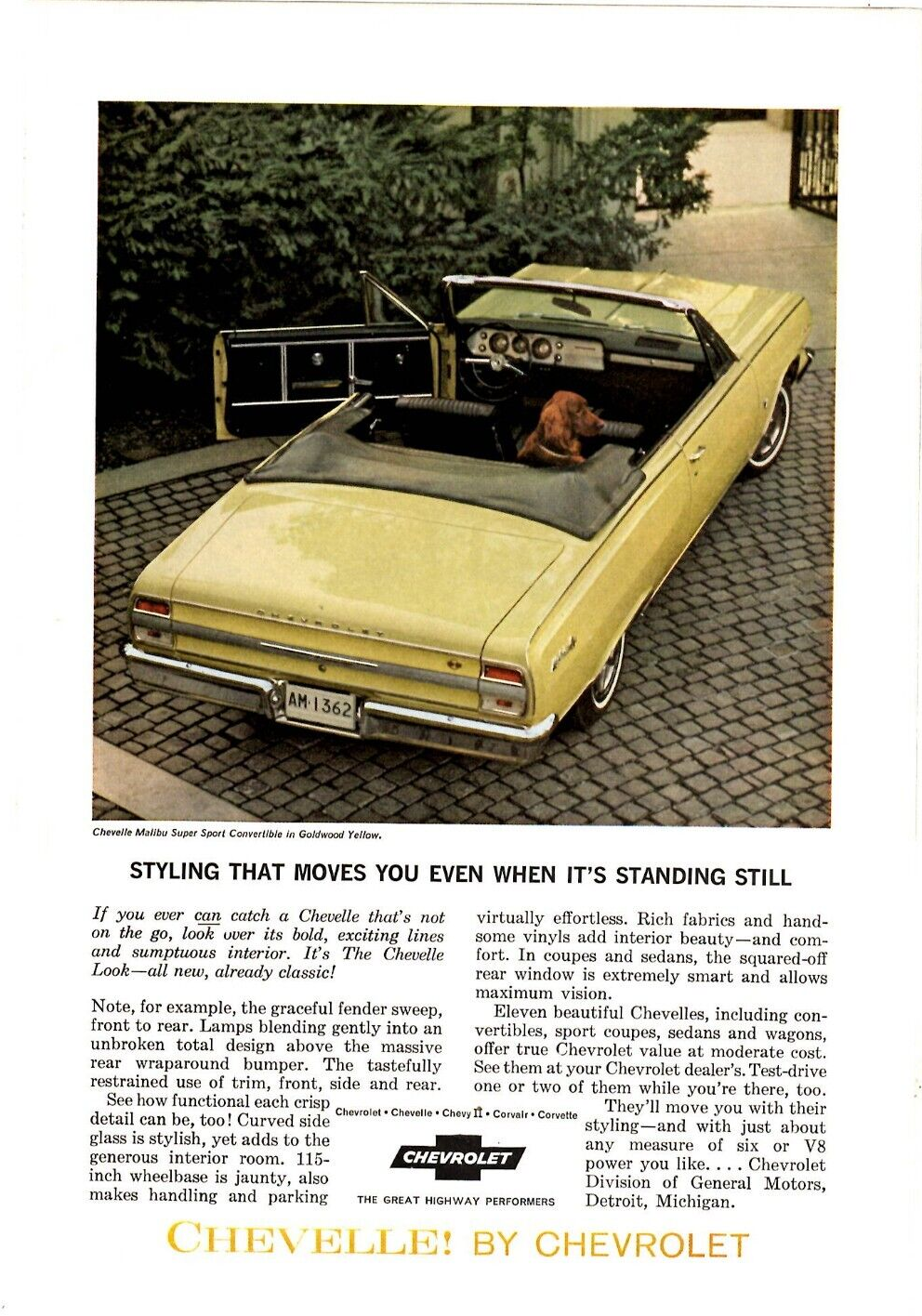
I recently received an email from Joe Gilman’s great granddaughter in response to my October 17, 2008 blog about Carlisle Indian School students working as apprentices at Ford Motor Company learning to assemble Model Ts. Those unfamiliar with Model T Fords and their assembly line might enjoy viewing this video about them: http://www.youtube.com/watch?v=S4KrIMZpwCY In the early days of the Model T, one mechanic assembled an entire car by himself; in later days workmen specialized in putting on specific parts of the car. Apprentices were probably taught how to assemble the entire car to allow them to work at any position on the assembly line.
Because Joe wasn’t a football star at Carlisle, his biography doesn’t neatly fit into one of my books. However, it is interesting and deserves to be told. So, I am serializing a shortened version of his story beginning with today’s blog.
Joe Gilman’s name first appears on the 1901 census of the Leech Lake Pillager band of the Chippewa as the 9-year-old son of Pah Dway We Dung. That fact that no father was listed implies that his father was dead or not of that tribe. His having an English name and his mother having a Chippewa name implies that his father was a white man. Later censuses classified Joe as being half-blood but that is inconclusive because the other half need not be a white man. It could also be a man from another tribe. Searching on his mother’s name revealed entries for 1895-97 that listed Pah Dway We Dung as having a son named Joe with no family name. The 1898 census listed her as having a son named May Quom. After that her son was listed as Joe Gilman. It seems reasonable that Joe’s Chippewa name was May Quom.
Joe began being listed by himself in 1907 at age fifteen. His mother may have died at that time. Family tradition has it that she remarried sometime in Joe’s youth. His stepfather shot his dog when he was 12 or 14 causing his to run away to Minneapolis where, according to his older daughter, he danced on the streets for money.
End of Part I
Tags: Leech Lake, May Quom, Pah Dway We Dung, Pillager Band
Posted in Carlisle Indian School, Football | Leave a Comment »
November 28, 2009 by tombenjey
Justin Tyler Moore informs us in his comment on Chilocco Indian School that he shot a video of the school, including interiors of some buildings, and posted it on the web. You can find his video at: http://www.abandonedok.com/chilocco-indian-school-revisited
From the video you can see that the buildings could be converted into a museum, resort or other worthwhile use. Thank you for posting this, Justin.
Tags: Chilocco Indian School, Prairie Light
Posted in Carlisle Indian School, Haskell Institute | Leave a Comment »
November 25, 2009 by tombenjey
The March 1881 edition, only the ninth, of Carlisle Indian School’s first newspaper, Eadle Keatah Toh, contained the following article on the origin of race:
An Indian Tradition.
Among one of the south-western tribes of Indians there is a tradition that long ago there were in the world only three men, who were all black. Once as they journeyed together they came to a deep pool of beautifully clear water. Here they halted, and one of them plunged into the water, from which he came out no longer black, but white. Seeing this the second man followed his example but the pool was so clouded that he emerged neither black nor white but a brownish red. The last man feared more than ever when he saw how dark the water had become so he timidly touched it only with the palms of his hands and the soles of his feet, which were thus made a little lighter color. So from this time on there were three races, the white man, the Indian and the Negro.
After this the three men journeyed still farther until they reached a place where three packages were lying. The white man caught up the first which contained books and paper and pens. The Indian was quite satisfied with the bows and arrows of the second, while for the poor black man who held back timorously as before, nothing was left but the hoe and the ax, and thus concludes the tradition, did the white man become a scholar, the Indian a hunter, and the Negro a slave.
This piece raises a lot of questions. It would be useful to know more about its origin.
Tags: Eadle Keatah Toh
Posted in Carlisle Indian School | Leave a Comment »
November 18, 2009 by tombenjey
On Monday, the Supreme Court of the United States refused to hear an appeal of the Washington federal appeals court decision that ruled that the Native American appellants had waited too long to claim that the Redskins trademark was racist. This decision is expected to allow the Redskins to retain trademark protection for their team name. Seventeen years ago, seven activists filed papers to have the Redskins stripped of trademark protection because, in their view, the name is racist and offensive. The activists had success early in the process but lost at the two highest levels. Further attempts with possibly different appellants are expected.
Smithsonian Linguist Emeritus Ives Goddard spent several months researching the term “redskins” and found it had a benign origin. He found that the term was coined long ago by American Indians to differentiate themselves from white and black people. The offensive meaning claimed by the activists appears to have been coined in the 1960s.
The Boston NFL team was renamed Redskins in 1933 to honor its new head coach, Lone Star Dietz. Dietz’s central role in this controversy has brought his heritage to come under much scrutiny decades after his death.

Tags: redskins, Supreme Court, trademark
Posted in Lone Star Dietz | Leave a Comment »
November 9, 2009 by tombenjey
Both AP and UPI wire services report that Jim Thorpe’s sons plan on suing the Borough of Jim Thorpe, PA to have his remains removed from the town that now bears his name to the graveyard near Shawnee, OK in which Thorpe’s father and other relatives are buried. Jim’s youngest son, Jack, is quoted as saying, “According to Sac and Fox tradition, Dad’s soul will never be at peace until his body is laid to rest, after an appropriate ceremony, back here in his home. Until then, his soul is doomed to wander. We must have him back.”
According to the UPI, Thorpe wanted to be buried in the Oklahoma cemetery with his relatives but, at the time of his death, his family didn’t have the resources to build what his widow thought to be a proper monument to her late husband and the governor of Oklahoma declined to provide to necessary funding. Mrs. Thorpe then negotiated an arrangement in which the boroughs of Mauch Chunk and East Mauch Chunk, two towns in which Big Jim never set foot, would merge and be renamed after the football star. They were also to build an appropriate monument. According to all accounts both sides lived up to the agreement, but the expected tourist interest never materialized.
The attorney representing the Thorpe family plans to file a law suit in Federal Court in Philadelphia later this month under the 1990 Native American Graves Protection and Repatriation Act. That act requires that federal agencies and institutions that get federal funding return American Indian remains to their families or tribes. I suspect that this law was intended to deal with bones and artifacts that graverobbers sold or gave to museums, schools or government agencies, not for agreements freely entered into. This is a tough case because there are no bad guys. The question I have is: who would suffer most if his remains are not returned to the family? Perhaps Bob Wheeler, the author of the definitive Jim Thorpe biography, can shed more light on this.
Tags: Bob Wheeler, Mauch Chunk, Native American Graves Protection and Repatriation Act
Posted in Carlisle Indian School, Football, Jim Thorpe | 1 Comment »